“The Painting” – By Cydra
I am from the quiet mornings,
From coffee steam and a blank canvas waiting.
I am from old warm memories,
From a box tucked in my room,
From faces soft at the edges & hands that still hold me within heart.
I am from the cheetah I paint,
From every red scar and every brown print,
From a body that learned to wear both.
From clocks that run louder than my thoughts,
From a body that keeps working even when my eyes are tired.
I am waves that keeps me going,
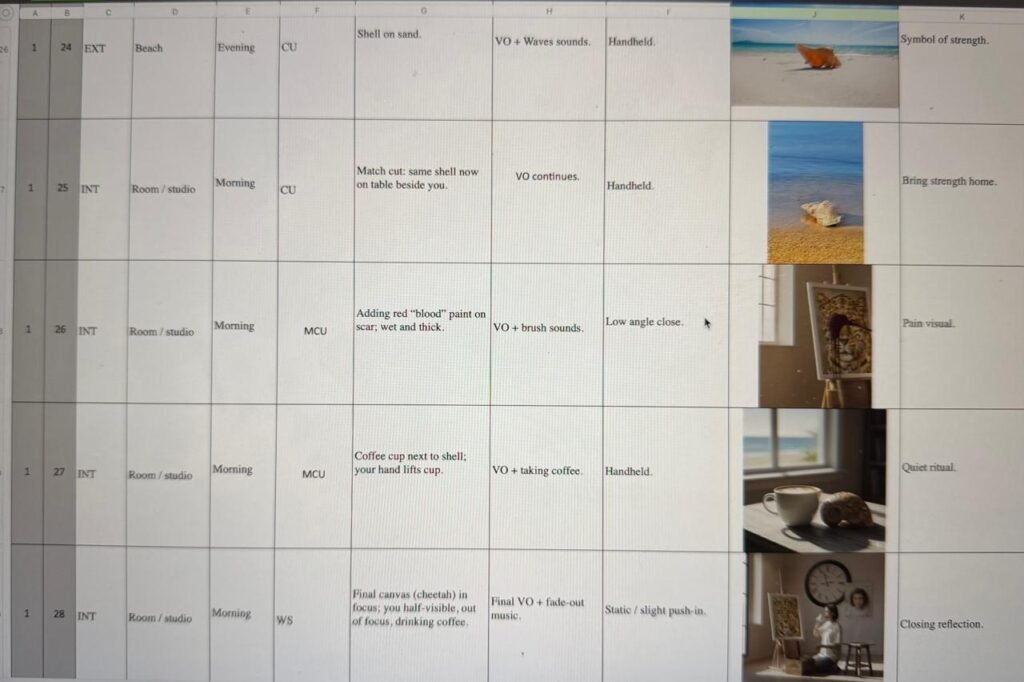
From the shell that keeps the sea in its echo,
From eyes meeting the canvas and the last sip of coffee,
From the cheetah choosing to continue the journey.
Synopsis
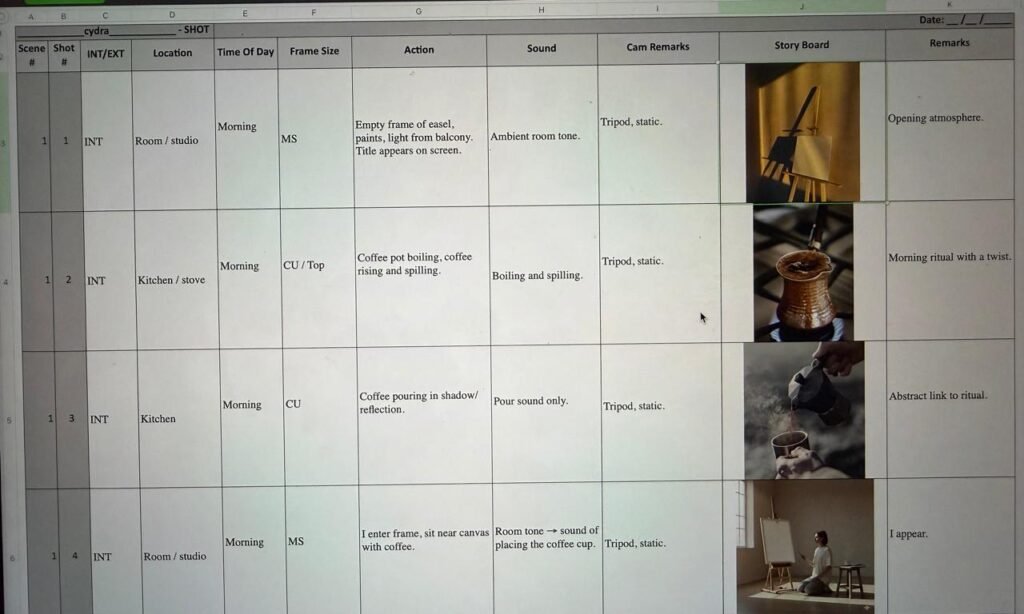
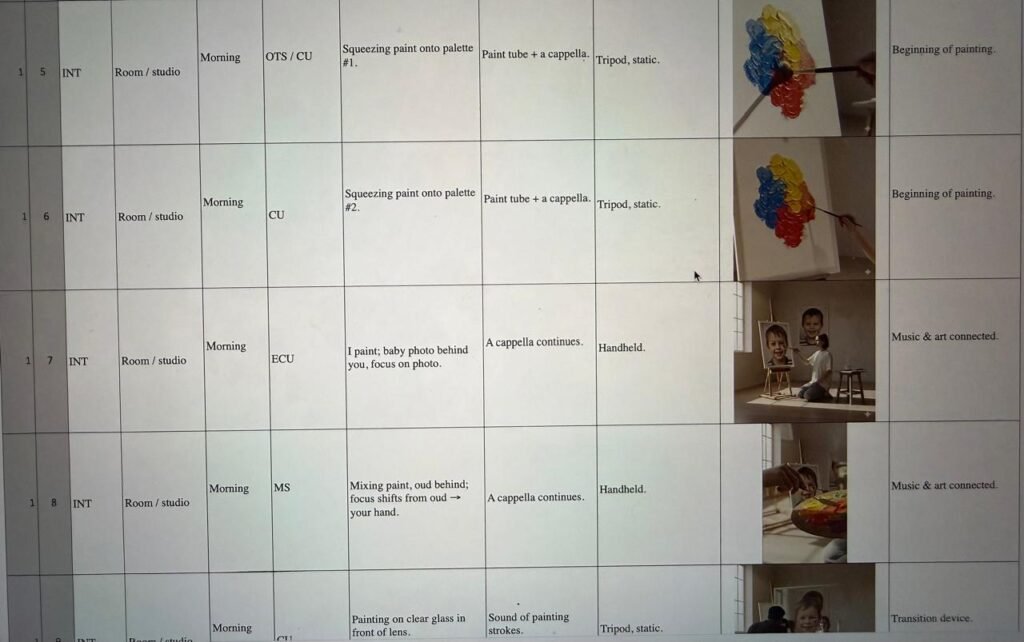
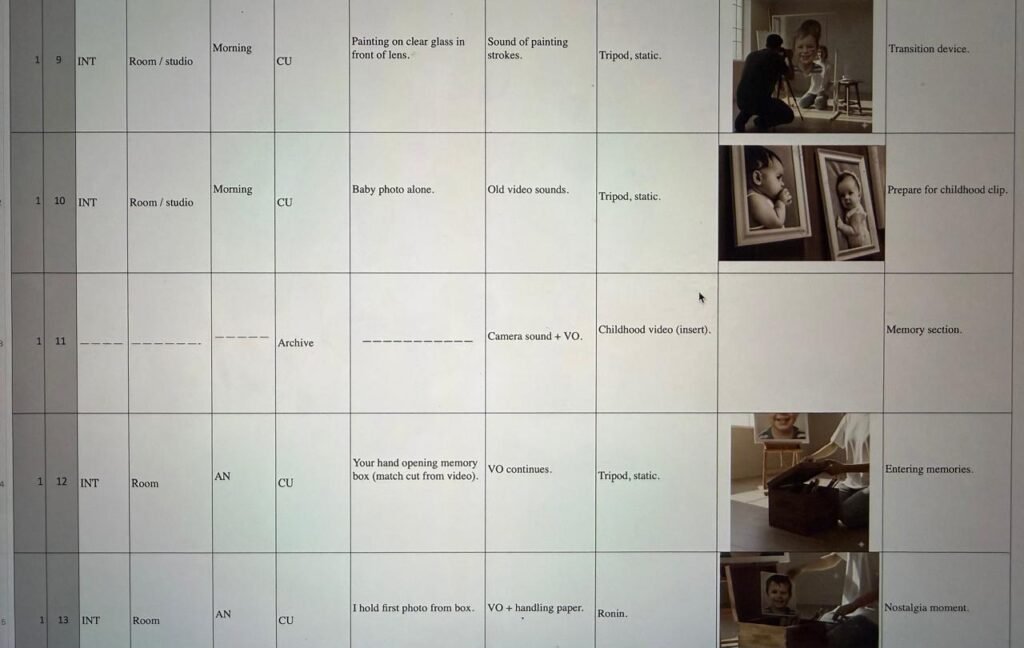
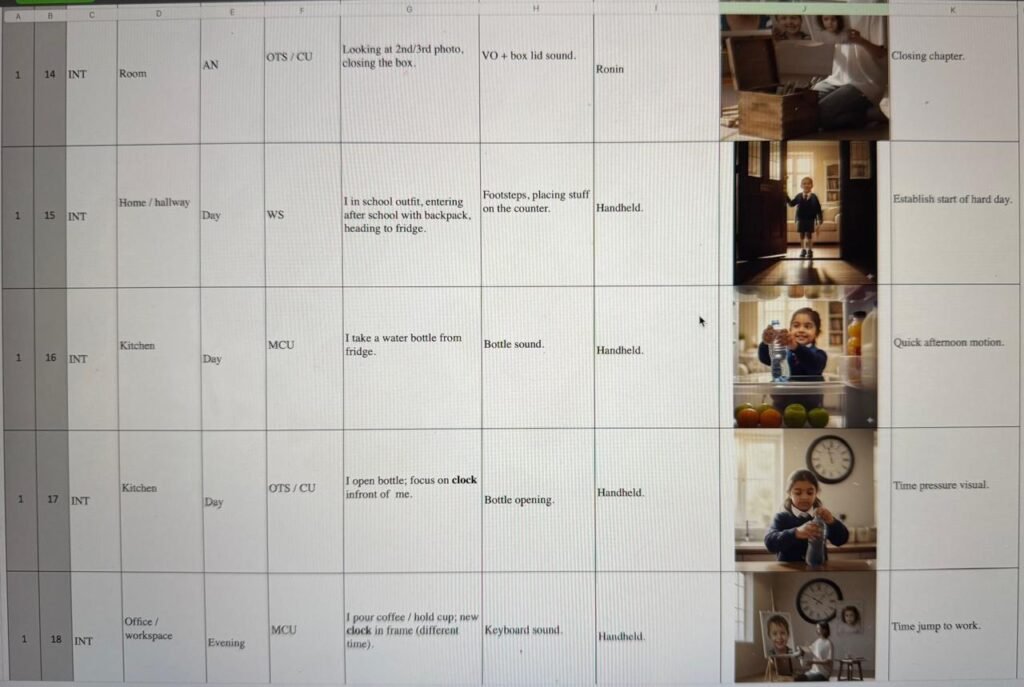
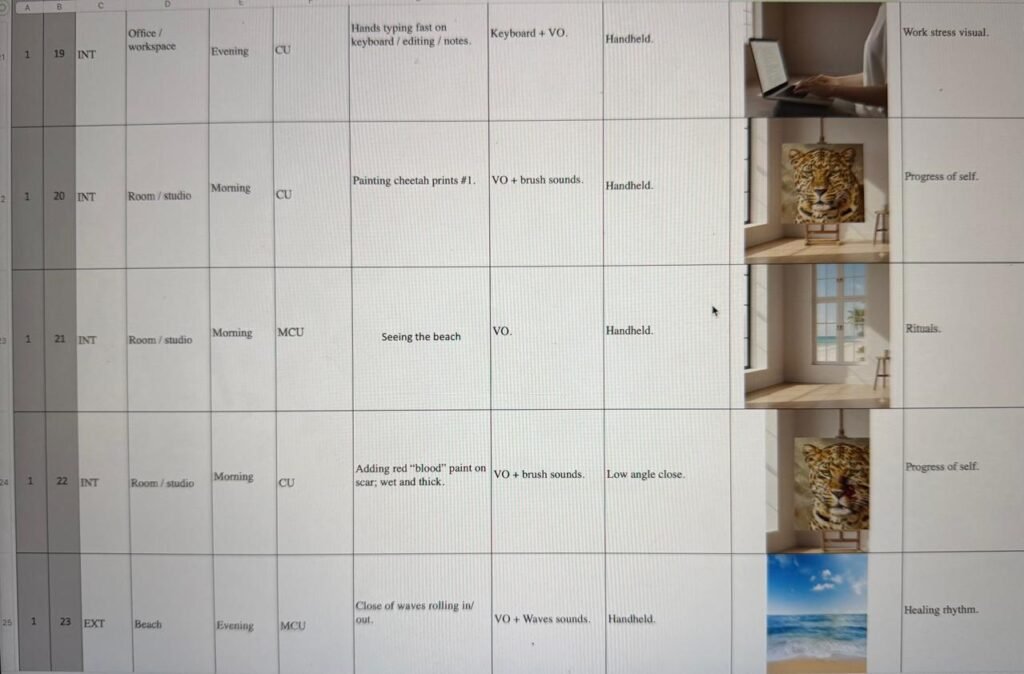
“The painting” is a two-minute self-portrait built around a single morning: a quiet room, a cup of coffee and a blank canvas that slowly becomes a cheetah. As I paint, the film drifts into memories: childhood images, a box of photographs, the feeling of coming home from school already tired and still needing to work, and a night beach that has become a place of strength for me.
On the canvas, the cheetah collects both spots and scars. The spots stand for the good things that have marked me: love, friendships, small moments of care. The scars are painted as wet, red strokes that never fully disappear into the fur. Together they form one animal, one body, suggesting that “where I’m from” is not one clear place or moment, but this mixture of beauty and hurt that I now carry.
Form and technique
Formally, the film answers the Where I’m From brief through objects and atmosphere rather than direct explanation. George Ella Lyon’s poem builds identity from concrete details—household products, plants, textures—rather than a linear life story, and has been widely used in education to help students write self-portraits from memory fragments.I wanted to translate that approach into moving images.
The room is almost empty, pale walls, an easel by the balcony, a table, a box on the floor so each new object changes the emotional temperature: the memory box turns the room into an archive; the school outfit and clocks introduce pressure; the shell brings in the sea. The camera is mostly still, with shallow depth of field isolating details like boiling coffee, the edge of a photograph or the shine of wet red paint on the cheetah. Editing moves between three overlapping times: the present morning in the studio, an earlier past in childhood images and photos, and more recent difficult days ending at the beach. The sound design layers close interior noises with harder, mechanical sounds in the “hard day” section and almost pure waves at the shore, so that shifts in feeling are heard as well as seen.
Research and influences
While planning “The painting”, I was drawn to artists and storytellers who use painting not only as an image, but as a way to carry pain, memory and identity.
The clearest reference for me was “Frida Kahlo’s self-portraits”, especially “The Broken Column” (1944). In this painting Kahlo shows herself split open, her body held together by a brace and pierced with nails, turning chronic pain into something visible and direct. Art-historical discussions emphasise how suffering permeates her self-portraits and often becomes their explicit subject. Reading it made me realise how strongly a painting can speak about what is happening inside a person. When I started painting the cheetah adding both soft prints and raw red scars I was thinking about the same idea: that the canvas can hold what the body and voice sometimes struggle to say.
I was also influenced by films about painters where the act of painting is tied to inner life. Julian Schnabel’s “At Eternity’s Gate” (2018), about Vincent van Gogh, presents painting as an almost compulsive way of grasping something larger behind what he sees; the camera often stays close to the brush and the canvas, immersing us in his perception.The animated feature “Loving Vincent” (2017) goes further by literally painting every frame in van Gogh’s style, making his swirling skies and thick strokes into the emotional climate of the story. Watching these two very different films about the same painter helped me trust that the “world” inside a painting can be used to talk about the world inside a person.
In literature, I was moved by “Donna Tartt’s novel “ The Goldfinch “, where a single painting “Carel Fabritius’s “The Goldfinch becomes a container for the protagonist Theo’s trauma after losing his mother. Critical readings note how “the painting” comes to embody the pain, guilt and conflict of that day, haunting him for years. That idea of one image quietly holding an entire storm of feeling influenced how I thought about the cheetah in my film. I wanted the animal on the canvas to work in a similar way: not as decoration, but as something that keeps returning and collecting marks and meaning as the film unfolds.
Underneath all of this, “George Ella Lyon’s “Where I’m From “stayed important as a textual reference. Analyses of the poem emphasise how Lyon uses small, vivid details to build a sense of identity through memory rather than explanation.Reading this gave me permission to lean into my own details the coffee pot, the box of pictures, the clocks, the shell, the cheetah without feeling that I had to describe every event of my life. These works together made me believe that painting, objects and fragments can carry emotion as strongly as explicit storytelling, and that is what I tried to apply in “The painting” .
Evaluation
Looking back at the finished sequence, I feel the film stays close to its central idea: finding strength in the mix of good and bad rather than pretending the bad never happened. The cheetah painting holds this most clearly for me, especially in the final shot where the canvas is sharp and I am blurred behind it. If I extended the project, I would refine the colour grading between time layers and add one or two longer-held shots of my face to balance the focus on objects. Within the two-minute limit, however, “The painting” feels like an honest and coherent response to the “Where I’m From” brief.